Entries to Win Afghan

Sign up to receive the Books Leaving Footprints Newsletter. Comes out occasionally. No spam. No list swapping. Just email me! jhyshark@gmail.com Previous gifts include a short story, a poem, and coupons. Add your name, and don't miss out!
Showing posts with label arthropod. Show all posts

Sunday, February 2, 2020

Critter Play

 
Just a few pictures of critter evidence from Thursday. Fun. Mostly what I saw was squirrel tracks. Everywhere. But I thought this one was funny, with little red squirrel tracks in a boot print. There were also a lot of big ones, probably fox squirrels, and the gray squirrels in between.
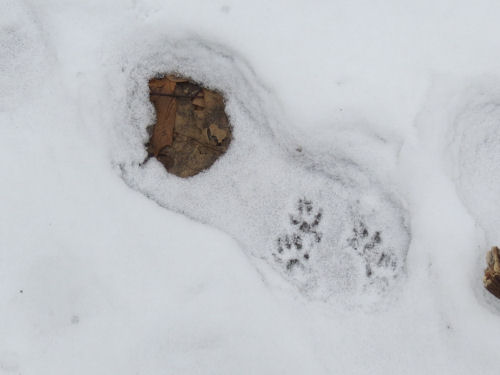
squirrel tracks in a boot print

Loved finding nice opossum tracks- see the splayed out thumb?

opossum tracks

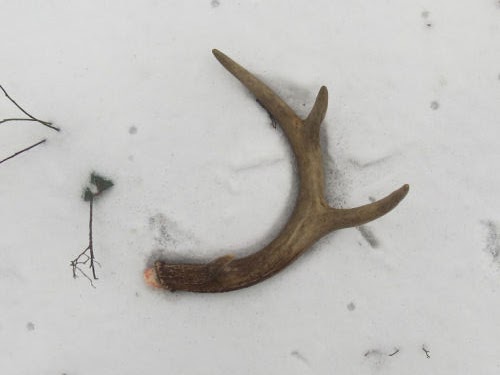
Found one cast-off deer antler.

deer antler

When I picked it up, the depression was full of snow fleas!

snow fleas

snow fleas

But the cutest was a member of the sloth hiking team (We will get there when we get there) taking a break, lying down under the snow.

sloth face

In other news: I wrote my column in the morning, and worked on some filing in the afternoon. Oh, and I made hot biscuits. Just got a hankerin'

See Meet the Snow Flea

Tuesday, February 21, 2012

Meet the Snow Flea

 
If you live in the northern United States, this is a very common bug, but I haven't talked about it before. It's commonly called a snow flea, but it's not a flea. It's not an insect either, but it is a cousin of the insects. It's an arthropod like shrimp, crabs, scorpions, centipedes, spiders, insects, etc. Arthropod just means "jointed foot."

Did you notice in the pictures yesterday that there were black specks beside the feathers, on the snow? Those little guys are the snow fleas! Scientific name Hypogastrura nivicola.

I've made a short Shark Show you may enjoy.


Other arthropods
See Horseshoe Crab
See Wolf Spider
if you like this blog, click the +1  

Monday, December 5, 2011

Somebody Went to the Ocean, and All...

... I got was to see a Horseshoe Crab shell. But that's OK. I'd never seen one in real life before.

horseshoe crab

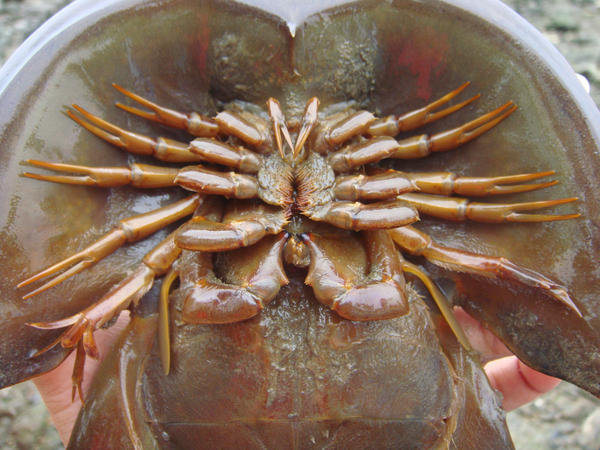
I didn't realize how big they are! They also aren't really crabs. They are arthropods, closely related to spiders, but even more closely related to the extinct trilobites. This isn't my picture (it came from Miss Pegasus), but it shows what's under the shell of a live one.

There sure isn't much agreement on line about how many pairs of legs they have, but I think the correct answer is 6 pairs. They use the small ones for eating, the next set for mating, and the other 4 sets for walking.

horseshoe crab

The tail is very important because they can use it to turn over if they get flipped. So a horseshoe crab with a broken tail could be in serious trouble.

I hope I get to see one in real life sometime! I bet lots of you have seen them. They are found around the world, at the ocean.

if you like this blog, click the +1  

Thursday, June 23, 2011

Small Brown Friends


Ellen and I sure picked the good day to play last week. It has rained all this week. A low pressure is parked over Michigan, and we are WET. With some help from BugGuide.net, I can tell you what these small creatures are.

OK, we'll do the one some of you may not like so much first. This is an unidentified species of Wolf Spider in the genus Arctosa. This one was scrambling around on the Lake Michigan beach.

wolf spider

I was surprised that Bug Guide IDed it as a wolf spider, because I thought they were darker, with stripes, and some are. It's just that this is a different one. Clearly, I need to learn more about what makes a wolf spider: hairy, 8 eyes in a particular arrangement, long legs, note the shape of the cephalothorax and abdomen.

Wolf spiders can bite, but they usually won't unless they are provoked. Bites can be painful, but usually not serious unless someone is allergic.

Next up is someone much more cute. As I'm sure you will also recognize, this looks like a black lady bug, or lady beetle.

fifteen spotted lady bug

Well, it turns out that is basically correct. The real surprise is that this is a Fifteen-spotted Lady Beetle, Anatis labiculata. So, where are the spots, you ask? Unlike humans, who gain spots as they age, this beetle loses its spots. When they are young, they are gray with dark spots. This one is really old, with a solid purple-black case. Aren't the legs cute?

Now I'm just going to have to look for a young one!