Entries to Win Afghan

Sign up to receive the Books Leaving Footprints Newsletter. Comes out occasionally. No spam. No list swapping. Just email me! jhyshark@gmail.com Previous gifts include a short story, a poem, and coupons. Add your name, and don't miss out!
Showing posts with label thistles. Show all posts

Tuesday, August 12, 2025

Roadside Flowers


This will be a collection of a few plants I've seen flowering along the roadsides in the past few days.

I walked to pay the summer taxes today. The humidity was a killer, but I got some exercise.

Here's a bull thistle Cirsium vulgare. They have big spines all down the stems as well as on the leaves.
bull thistle flower


Remember a few days ago I talked about a couple kinds of Silene? I got pictures of another of the common ones. This is Evening Lychnis, Silene latifolia, or White Campions. It used to be in a genus called Lychnis but I guess they have all been moved to Silene. It's confusing in more ways than one. It's really hard to tell this one from Night-flowering Catchfly.

Neither one is a very handsome plant. They are leggy and sticky to touch with sprawling white flowers.


The veining is slightly different on the swollen calyx, and the Evening Lychnis has 5 styles while the other has 3. You have to pull a flower apart to check. I did, so I'm pretty sure this is Evening Lychnis/ White Campion.
evening lychnis


I learned something new on this one. These are the flowerheads I found. I couldn't figure out what it was.
double soapwort


But these clusters of calyxes looked familiar.
double soapwort


Yup- same kind of growth pattern. This is after the blooms have faded. This is common soapwort.
common soapwort


It grows all over the place here. Saponaria officianalis, also called Bouncing Bet. The flowers are usualy single like these, rather than with doubled petals. Truth be told, I don't like either one very much. But I guess the double one is a sort of vintage garden plant.
common soapwort


Here's one I am not happy to find near home. This is False Cervil, Anthriscus sylvestris, which is becoming horribly invasive. It's easily confused with Poison Hemlock if you don't look closely.
false chervil


But here's the coup for the day. In the other direction from where I found it a few years ago, here is another patch of the Bigbract Verbena, Verbena brateata,.
bigbract verbena


But wait. It gets even better! A little farther, I found a couple of small patches that weren't growing right out of the edge of the pavement. Using a flat beer can as an improv shovel, I managed to bring one of those home with me. It's now in the rock garden in the spot where I planted some seeds that may or may not be the same plant- if they are even viable. Hope it "takes" because I love the texture. One reason some plants get labeled as weeds is because they spread so easily and grow without much of anything special. So, I think it has a good chance!
bigbract verbena


We got a wonderful 0.7 inch of rain this morning. But now, I'd be happy if it stops for a day because I have to do a lot of outside things tomorrow to be ready to leave. Today, I concentrated on the indoor stuff- collecting items to take, paying bills, cleaning the kitchen. It's still quite wet outside, but hopefully the grass (weeds) will be dry enough to mow tomorrow.

Miles hiked in 2025: 327.6

See A New Silene
See Bigbract Verbena or Not?

Tuesday, April 2, 2024

Summer of 1993 - Critters

 You have to know that the habitat Wetlands Research, Inc created, even though it was for an engineering purpose, was great for wildlife. This is just a sample. The Great Blue Herons loved the shallow water.
blue heron


Birds were everywhere! Two of my favorites that I have no picture of were a Golden Eagle that liked to hunt over the ponds, and often in the evenings, Nighthawks would gather and fill the sky. They were catching insects. I actually thought that was more interesting than the eagle.

My other favorite was the Yellow-headed Blackbirds. This was the first time I'd ever seen them, and they were everywhere. My pictures aren't very good. The camera I had then had no zoom capability. I got a much better picture of a male in North Dakota on the big hike. But here's what I do have.
yellow headed blackbird


And his Mrs.
female yellow headed blackbird


Now, let's go back to those nodding thistles. They may be alien, but the Goldfinches sure loved the seeds.
goldfinch on nodding thistle


Birds ruled, but there were plenty of other representatives of the animal kingdom. I've already mentioned the beavers that I never saw! This garter snake got himself into one of the culverts. They can swim, but I'm not sure s/he would have liked the steep sides. I don't remember if I helped it out. Pretty sure it's just an Eastern Garter Snake.
garter snake


Here's a Soldier Beetle. Probably a Goldenrod Soldier Beetle. But it's teasing you, by being on a teasel. They are pollinators, and supposedly prefer yellow flowers. I guess this one didn't get the memo.
goldenrod soldier beetle


Now for a test. Where is the wildlife in this picture?
killdeer


Did you find them? Mama Killdeer chose the middle of the driveway for her nest. Fortunately, they hatch and start running in just a few days. Thankfully, we found these, and blocked off that area until they were hatched.
killdeer eggs


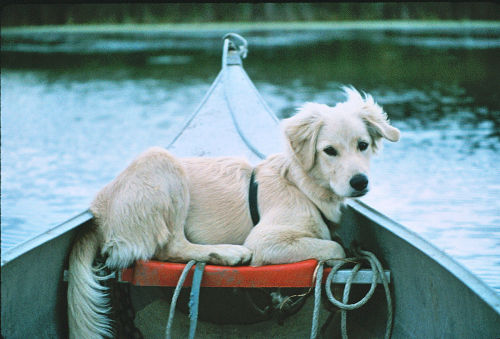
You know I have to end with my very favorite critter. This is one of my all-time favorite puppy pictures of Chips.
puppy in a canoe


In other news: I edited/formatted, I worked on my own book (working on the campsite section), I went to bell practice. It was a nasty, cold rainy day outside.

See Prairie Plants

Saturday, March 30, 2024

Summer of 1993 - Alien Plants

 The next couple of days are going to be about plants. They are not going to be a good representation of the plants that were on the site at Wetlands, Research, Inc. What they are is just whatever pictures I have that aren't too awful, or that I can "fix" to some extent.

First up is a species I was not familiar with at all before that summer. It was a beautiful thistle, but highly invasive, native to Europe, Central Asia and North Africa. Every stage of the plant is attractive, but it was pretty much taking over any disturbed soil. It is Nodding Thistle, Carduus nutans. I don't have a picture of the rosette, but it was large and spiked all over, looking quite nifty. Here is the bud developing.
nodding thistle


It grew tall, and the flower head was large, a couple inches across. As it matured, the flower would turn to face downward, thus "nodding."
nodding thistle


This picture doesn't have the flower in focus, but it does show how prickly the whole plant is. It's about as uncomfortable to touch as our Bull Thistle.
nodding thistle


Next up is a plant that was growing on/in most of the ponds. This is White Water Crowfoot, a buttercup, Ranunculus aquatilis. It's native to the western US, but can really clog up ponds. And it prefers slow-moving water, so we made it very happy. When it blooms, the flowers are only about an inch across and stick up out of the water, but the roots and leaves make huge floating mats of vegetation.

Let me say, that I wasn't quite at the beginner stage of plant mania, but it had only been a couple of years earlier that I was challenged to be more professional and learn scientific names. (Maybe I'll tell you about that trip some day.) And, I certainly hadn't been introduced to the idea of major efforts to remove invasives. But I was beginning to be aware of their problems.
water crowfoot


Here's a real baddie. You probably know this one, especially if you do trail work. This is one of the primary invasive species on everyone's hit list. It's Multi-flora Rose, Rosa multiflora. It's native to the Far East and was brought here as a garden plant. It forms large dense shrubs that crowd out everything else. Not to mention the thorns.


You might be surprised to learn that teasel is also alien and invasive. You can't tell from this picture, but I remember that it's Cutleaf Teasel, Dipsacus laciniatus. I've featured this plant on the blog a few times because it also grows around here. Anyway, the flower heads are pretty and the seed pods are nice in dried arrangements. Those spiky seed heads have also been used historically to do things such as card wool. But it can form monocultures and crowd out other plants.
teasel head


While we are on the topic, let me just say that cattail, Typhus sp., is native, but it can also form monocultures and crowd out pretty much everything except muskrats and red-wing blackbirds. There is considerable discussion about how much of it should be allowed to grow and fill in ponds and wetlands. There isn't one right answer. If your wetland is for water treatment, it really doesn't matter. But if you want to create a diverse environment for visual enjoyment and wildlife habitat, you may need to do something to keep the cattails in check.

When I went back to U of M that fall and began working on the constructed wetland project at Matthaei, one of my duties was to try to promote native plants and remove invasives. I got real familiar with the myriad invasives and up-close-and-personal muddy all the time digging and pulling. It was a never-ending job. However, none of that was on my job description here.

In other news: I wrote my Get Off the Couch column and edited.

See Inside Duties

Wednesday, August 18, 2021

Albert, Bruno, Cuthbert, Dexter, Ernest, Franklin

  Monica and I hiked together today. You know I love silly trail games and she taught me a new one. We took turns naming the toads we saw alphabetically. We saw 6 of them and arbitrarily decided they were all boys. I did A,C,E. Monica did B,D,F. This is Franklin. Can you see him? I think Albert was the largest. toad

We went from 96th St to Highbanks Lake and back on the North Country Trail. That's a really pretty stretch, and I wanted to see what the small wetlands looked like at this time of year. The answer is that there is water, but it's not as clear and extensive as in the spring. No surprise there. wetland

And, I learned a new plant- so this makes it a STELLAR day. This is Swamp Thistle, Cirsium muticum. This is a really attractive thistle, and it's not as prickly as many of the common species. The calyx is blue-tinged with an interesting pattern. Can't believe I did not know this one.
swamp thistle


We also caught Rattlesnake Weed in bloom, Hieracium venosum. It's just a kind of hawkweed, and its best feature is the maroon veins in the leaves. But I rarely catch one flowering, so now you have it. rattlesnake weed

Highbanks is always a pretty destination. Today was no exception. I usually prefer my water blue, but the silvery color today made the water really stand out from the trees. Highbanks Lake

Did we have a good time? We sure did. Ten miles. friends

North Country Trail miles for 2021 is at 370.

In other news: I worked a bit on the trailer. Monica helped me do one thing! Not much sleep last night- who knows why? Tomorrow- full steam ahead.

North Country Trail, Newaygo County, 96th St to Highbanks Lake and back, 10 miles
See Hiking with Denali

Wednesday, June 13, 2018

A Few More Matthaei Flowers

 
I think this will be the last day for Matthaei Botanical Garden pictures. But I just want to show these few more.

This was a new one to me. Maybe you plant clock vine in your planters. I like it too. But I did not know there is a blue clock vine, Thunbergia battiscombei, native to Africa. Kinda funky, and my color.

blue clock vine

Next up is a prairie plant. Although it doesn't look as if the restored prairie is being tended much these days, there was one thing in bloom. This is false indigo, a nice showy prairie plant. Baptista leucantha

prairie false indigo

I have to show you this, because it's pretty awesome. This is a really rare and endangered plant, the Pitcher's thistle, Cirsium pitcheri. I showed it to you once before. I found it growing naturally at Arcadia Dunes last year. That was my first time to ever see it. Although it was certainly planted at MBG, the fact that it seems content to grow, and has buds here is pretty awesome. Having multiple populations of endangered species is a really good thing. Yes, it's that scraggly, silvery tall plant in the middle.

Pitcher's thistle

Finally, just because I showed you this once before, I have Malaysian orchid tree, Medinilla magnifica. This was in the Conservatory, of course. This one was labeled, so I've confirmed that's what it is.

Malaysian Orchid Tree

Love, love, love visiting great botanical places. One more coming up soon. Stay tuned!

In other news: my computer was being bad this morning, so I didn't finish some things I started. But in the afternoon, I buckled down and wrote two chapters in The Bigg Boss.

See Arcadia Dunes- Pitcher's Thistle
See Stan Hywet-Medinilla
if you like this blog, click the +1   or

Like This!


Monday, July 17, 2017

Arcadia Dunes- 3 More Trails and a Freebie

 
My goal for the day was to hike the rest of the trails at Arcadia Dunes. That was three more loops for a total of about 8.5 miles.

As I was driving back to the area from my campsite, I realized that the ridge ahead of me is the glacial moraine on which the Dry Hill and Camp Arcadia loops are perched. You can see what a long ridge of a hill it is.

Arcadia Dunes Dry Hill ridge

First I went back to the same trailhead as yesterday on St. Pierre Road. But this time I took the Camp Arcadia Loop to the southwest. This is a much flatter loop, about 3.5 miles. Still almost all wooded and makes a nice easy hike for those who aren't interested in ten hilly miles on the trail I did yesterday. It gets its name from the volunteers who helped build it from the Lutheran Camp Arcadia.

Camp Arcadia trail

The wildflower that was blooming everywhere was wild onion. Here's my best shot.

wild onion

Finished that trail by 10:30. Had a snack and drove the few miles to the Old Baldy trailhead. Keep in mind that just about every large open dune on the west coast of Michigan is named Old Baldy. This is the one at Arcadia Dunes in the C.S. Mott Nature Preserve.

This trail has two nested loops, and by doing a zig-zag pattern I hiked all but 0.1 mile in this system. I expected this to be a lot of open meadow, sand in the sun, and generally hot and not as nice except for the lake. Wrong. It's almost all forested except for the final approach to the dune.

The preserve is trying to keep people restricted to certain paths to protect the dune.

Arcadia Dunes Old Baldy trail

The view at the end is pure Michigan. I took a lot of pictures, but chose this one to show you. It really should have a series, because you can't tell from this picture that there is a very steep 380-foot drop to the surface of the lake. Climbing down and up is not recommended. I took one picture of a small boat and people down on the beach. They look like toys.

Arcadia Dunes Lake Michigan view

And, I got to fulfill one of my lifetime plant quests. I saw the federally endangered Pitcher's Thistle in bloom. It only grows on the shores of the Great Lakes.

Pitcher's Thistle

The biggest downside of this trail was that it had quite a lot of poison ivy. But I washed my legs when I got back to the car. About 4 miles for this trail. I should mention that one section is a nice accessible trail out to an overlook at the lake that was in good condition, and not all in blazing sun like many accessible trails are. Bicycling is not recommended on the Old Baldy loop because the soil is sandy and fragile.

Back to the car and ate some lunch. About 12:30.

Next part of the quest was to find Pete's Woods Trail, which was on the east side of the preserve. I had my doubts because I know the road the trailhead was supposed to be on. Seasonal, and definitely on the low end of that spectrum. Well, the trail was a nice 1.5 miles up and around the top of a hill and then back down. Interesting changes in topography without being too strenuous, and the spring wildflowers are supposed to be excellent. It was definitely different from the others.

But the biggest challenge was indeed the road. Puddles clear across the road (not my favorite because you can't tell how deep they are) and 8-inch deep loose sand ruts. My Subaru had no issues, but I think not every car would like that trip.

It wasn't a place where pictures can really show the trail features. This shot maybe captures some of the rolling topography. Pete was the farmer who owned this land until the 1970s.

Pete's Woods Trail

So, my "official" quest was done. But I knew there was a tiny nature loop I'd never seen that was only a couple of miles out of my way. Since this is still more than an hour from home, I decided I was up for just a little bit more walking so I could see it.

This loop is called Misty Acres, in the Borwell Nature Preserve (incidentally also managed by the Grand Traverse Nature Conservancy- the same as all the Arcadia Dunes trails). The loop is indeed tiny, under a mile, but it was a very nice walk. This is a fairly new preserve, and they are still inventorying the plants and features. There may be more public access in the future.

My pictures are crappy with too much dappled sun, but half of the loop is along a steep ravine with a creek at the bottom that flows into the Betsie River. At the north end of the loop you can get glimpses of the river through the trees.

Best picture there is some bright little mushrooms. Total miles for the day, about 9.5.

orange mushrooms

Home, car unloaded, clean, ate a big salad. A great weekend, but I think I'm going to bed early to try to rest up a bit to face work tomorrow!

C.S. Mott Nature Preserve, Arcadia Dunes, Old Baldy Trail, Camp Arcadia Trail, Pete's Woods Trail, Borwell Nature Preserve, Misty Acres Nature Trail

(BP -3 and counting)

See Arcadia Dunes- Dry Hill Trail
if you like this blog, click the +1   or

Like This!