Entries to Win Afghan

Sign up to receive the Books Leaving Footprints Newsletter. Comes out occasionally. No spam. No list swapping. Just email me! jhyshark@gmail.com Previous gifts include a short story, a poem, and coupons. Add your name, and don't miss out!
Showing posts with label endangered species. Show all posts

Wednesday, June 13, 2018

A Few More Matthaei Flowers

 
I think this will be the last day for Matthaei Botanical Garden pictures. But I just want to show these few more.

This was a new one to me. Maybe you plant clock vine in your planters. I like it too. But I did not know there is a blue clock vine, Thunbergia battiscombei, native to Africa. Kinda funky, and my color.

blue clock vine

Next up is a prairie plant. Although it doesn't look as if the restored prairie is being tended much these days, there was one thing in bloom. This is false indigo, a nice showy prairie plant. Baptista leucantha

prairie false indigo

I have to show you this, because it's pretty awesome. This is a really rare and endangered plant, the Pitcher's thistle, Cirsium pitcheri. I showed it to you once before. I found it growing naturally at Arcadia Dunes last year. That was my first time to ever see it. Although it was certainly planted at MBG, the fact that it seems content to grow, and has buds here is pretty awesome. Having multiple populations of endangered species is a really good thing. Yes, it's that scraggly, silvery tall plant in the middle.

Pitcher's thistle

Finally, just because I showed you this once before, I have Malaysian orchid tree, Medinilla magnifica. This was in the Conservatory, of course. This one was labeled, so I've confirmed that's what it is.

Malaysian Orchid Tree

Love, love, love visiting great botanical places. One more coming up soon. Stay tuned!

In other news: my computer was being bad this morning, so I didn't finish some things I started. But in the afternoon, I buckled down and wrote two chapters in The Bigg Boss.

See Arcadia Dunes- Pitcher's Thistle
See Stan Hywet-Medinilla
if you like this blog, click the +1   or

Like This!


Wednesday, May 16, 2018

Not Quite New Plants

 
I saw a LOT of plants on this recent trip. Didn't get good pictures of way too many of them. Sigh. We may get to plants that were new to me, and even mystery plants. But tonight I'll give you three that were not exactly new, but they are notable for some reason.

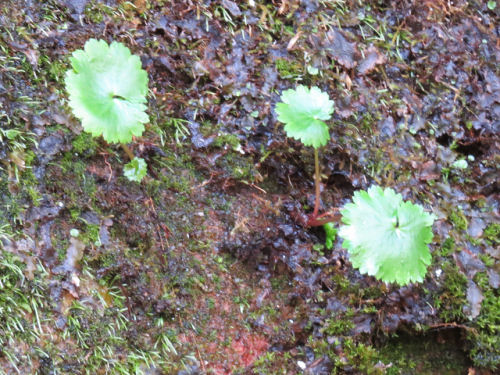
Although you might not think these little leaves are much to look at, this is actually quite a rare plant. This is only the second time I've seen it, and I have yet to see it in bloom. It doesn't even have a common name. It's Sullivantia sullivantii. It grows on cool, moist vertical limestone walls. Both times I've seen it were in Ohio. It's threatened or endangered in Illinois, Indiana, Minnesota and Tennessee.

sullivantia

This next one is not quite new, because I've seen it before but only in botanical gardens, never in the wild. It's a close relative of the familiar Jack-in-the-pulpit. This is green dragon, Arisaema dracontium. Here, it's first coming up.

green dragon

And fully open.

green dragon

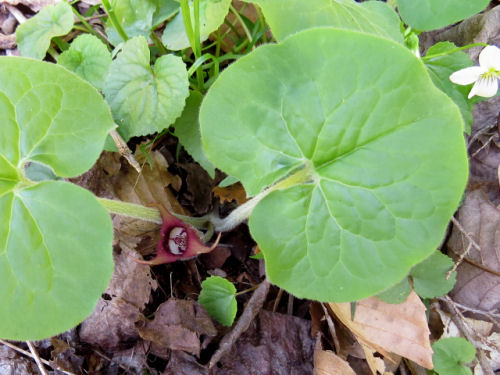
Finally, this one is pretty familiar, and I've seen it in the wild a lot. However, I've never seen the blossoms outside of a botanical garden. It's not rare, it's just that I'd never been in the right place at the right time before. This is wild ginger, Asarum canadense, and you'll notice how the blossoms are hidden beneath the leaves, right down on the ground.

wild ginger

They are beautiful!

wild ginger

In other news: I spent the whole day doing basically two things- getting the accounting from book sales on this trip recorded and reconciled with my inventory, and getting things out to Shagway Arts Barn for the summer and attending a training session there.

See Jack in the Pulpit
if you like this blog, click the +1   or

Like This!


Monday, July 17, 2017

Arcadia Dunes- 3 More Trails and a Freebie

 
My goal for the day was to hike the rest of the trails at Arcadia Dunes. That was three more loops for a total of about 8.5 miles.

As I was driving back to the area from my campsite, I realized that the ridge ahead of me is the glacial moraine on which the Dry Hill and Camp Arcadia loops are perched. You can see what a long ridge of a hill it is.

Arcadia Dunes Dry Hill ridge

First I went back to the same trailhead as yesterday on St. Pierre Road. But this time I took the Camp Arcadia Loop to the southwest. This is a much flatter loop, about 3.5 miles. Still almost all wooded and makes a nice easy hike for those who aren't interested in ten hilly miles on the trail I did yesterday. It gets its name from the volunteers who helped build it from the Lutheran Camp Arcadia.

Camp Arcadia trail

The wildflower that was blooming everywhere was wild onion. Here's my best shot.

wild onion

Finished that trail by 10:30. Had a snack and drove the few miles to the Old Baldy trailhead. Keep in mind that just about every large open dune on the west coast of Michigan is named Old Baldy. This is the one at Arcadia Dunes in the C.S. Mott Nature Preserve.

This trail has two nested loops, and by doing a zig-zag pattern I hiked all but 0.1 mile in this system. I expected this to be a lot of open meadow, sand in the sun, and generally hot and not as nice except for the lake. Wrong. It's almost all forested except for the final approach to the dune.

The preserve is trying to keep people restricted to certain paths to protect the dune.

Arcadia Dunes Old Baldy trail

The view at the end is pure Michigan. I took a lot of pictures, but chose this one to show you. It really should have a series, because you can't tell from this picture that there is a very steep 380-foot drop to the surface of the lake. Climbing down and up is not recommended. I took one picture of a small boat and people down on the beach. They look like toys.

Arcadia Dunes Lake Michigan view

And, I got to fulfill one of my lifetime plant quests. I saw the federally endangered Pitcher's Thistle in bloom. It only grows on the shores of the Great Lakes.

Pitcher's Thistle

The biggest downside of this trail was that it had quite a lot of poison ivy. But I washed my legs when I got back to the car. About 4 miles for this trail. I should mention that one section is a nice accessible trail out to an overlook at the lake that was in good condition, and not all in blazing sun like many accessible trails are. Bicycling is not recommended on the Old Baldy loop because the soil is sandy and fragile.

Back to the car and ate some lunch. About 12:30.

Next part of the quest was to find Pete's Woods Trail, which was on the east side of the preserve. I had my doubts because I know the road the trailhead was supposed to be on. Seasonal, and definitely on the low end of that spectrum. Well, the trail was a nice 1.5 miles up and around the top of a hill and then back down. Interesting changes in topography without being too strenuous, and the spring wildflowers are supposed to be excellent. It was definitely different from the others.

But the biggest challenge was indeed the road. Puddles clear across the road (not my favorite because you can't tell how deep they are) and 8-inch deep loose sand ruts. My Subaru had no issues, but I think not every car would like that trip.

It wasn't a place where pictures can really show the trail features. This shot maybe captures some of the rolling topography. Pete was the farmer who owned this land until the 1970s.

Pete's Woods Trail

So, my "official" quest was done. But I knew there was a tiny nature loop I'd never seen that was only a couple of miles out of my way. Since this is still more than an hour from home, I decided I was up for just a little bit more walking so I could see it.

This loop is called Misty Acres, in the Borwell Nature Preserve (incidentally also managed by the Grand Traverse Nature Conservancy- the same as all the Arcadia Dunes trails). The loop is indeed tiny, under a mile, but it was a very nice walk. This is a fairly new preserve, and they are still inventorying the plants and features. There may be more public access in the future.

My pictures are crappy with too much dappled sun, but half of the loop is along a steep ravine with a creek at the bottom that flows into the Betsie River. At the north end of the loop you can get glimpses of the river through the trees.

Best picture there is some bright little mushrooms. Total miles for the day, about 9.5.

orange mushrooms

Home, car unloaded, clean, ate a big salad. A great weekend, but I think I'm going to bed early to try to rest up a bit to face work tomorrow!

C.S. Mott Nature Preserve, Arcadia Dunes, Old Baldy Trail, Camp Arcadia Trail, Pete's Woods Trail, Borwell Nature Preserve, Misty Acres Nature Trail

(BP -3 and counting)

See Arcadia Dunes- Dry Hill Trail
if you like this blog, click the +1   or

Like This!

Monday, April 3, 2017

First Turtle, First Rescue

 
The first turtle of the year was nearly a disaster. I realized too late that the dark spot in the road was a turtle, so I straddled it. Then I stopped and went back (this was Saturday).

It was a Blanding's Turtle! That was my first turtle sighting of last year too, but in a much different place. The frequency with which I see this species continues to amaze me. They are considered "of special concern" in Michigan, although the Great Lakes is their primary area. In many states they are actually endangered.

photo label

The only other Blanding's turtle's I've held were captive ones for educational purposes. They usually keep themselves well surrounded by water. But apparently they will roam when looking for nest sites.

You can just barely see the spotting on the shell, especially on the front right where there's less mud.

photo label

And the plastron pattern is typical.

photo label

Anyway, I try to move turtles to the side of the road in which they were headed before they get smashed. It was especially gratifying that it was something more rare than a painted turtle. There are some drivers who seem to go out of their way to run over them. I hope this one lives to lay its eggs.

She was pretty big; about eight inches long.

On Sunday, I saw some painted turtles sunning. They slipped off their logs before I could snap their pictures.


See First Turtles of 2016
if you like this blog, click the +1   or

Like This!

Tuesday, March 29, 2016

First Turtles of 2016

 
Today was beautiful. Just the right temperature, about 50 degrees, sun shining. I took a 5-mile walk.

There is a small pond/wetland that used to be quite hidden, but there's been some recent timber harvesting that has opened the area up more. Don't know what that will mean for the wildlife in general, but the turtles were sure out catching the rays this afternoon.

Most of them were painted turtles. I saw probably ten of those. However, the best find was a big guy, sharing the same log with one of the painted ones. This is another Blanding's turtle. Considered endangered in general and of special concern in Michigan.

Blanding's turtle

I wasn't sure what it was until I got home and could see the pictures on the computer. They don't usually extend their necks so far out. But when I saw the spots on the shell, that was kind of definitive.

Blanding's turtle

This was the clincher, however. I managed to sneak around and get a shot from the front without scaring it off the log. That yellow chin is the absolute key. Blanding's turtle. No doubt. Also notice the spots on the leg.

This one is not as big as the one I saw a few years ago that I'm pretty sure was bigger than the state record. But this one was cleaner (easier to see features) and closer (better pictures).

You can see the big one at the link below.

See The Secret Pond and an Amazing Turtle
if you like this blog, click the +1   or

Like This!


Wednesday, July 20, 2011

Karner Blue Habitat

Today was my second and last day volunteering for the Karner Blue Butterfly count. I worked with Erin again, and that was fun because we had learned that we work well together. We checked three sites today, but didn't see any of the butterflies. That may only mean that they haven't emerged yet in those plots.

It's still blazing hot here. We were glad enough that it didn't take all day to finish. Actual temps were over 90, with the heat index over 100.

I thought I'd show you what the Karner Blues like in terms of habitat. The key component is the presence of Wild Lupine. The first picture shows one of the butterflies on those leaves. They lay their eggs on the lupine, and the larvae eat the leaves.

karner blue butterfly on wild lupine

They also have favorite flowers for nectar to feed on when they are adults. This was new information to me. First is Horsemint, Monarda Punctata. I think it looks odd- like the flowers aren't flowers but pale leaves.

photo label

Their other favorite is more common, just wild Yarrow, Achillea millefolium.

wild yarrow

All of these plants grow primarily out in the open. The most typical kind of site we surveyed was an old glacial kettle hole. You can tell in the lowest area there is a little more moisture because different kinds of plants grow there, even though it's not a lake any more. Prairie plants will grow in these, yes even in Michigan.

dry kettle hole

The other ecosystem the Karner Blues like is savannah. That is typically open grassy areas with an overstory of scattered trees so that sun can still reach the ground. This is a typical Midwest oak savannah. Most of the ones in Michigan have disappeared, but the Forest Service has been doing some controlled burns to open them up again. This little space looks like it hasn't needed burning. Again, the important thing is that the plants the butterflies like can grow.

oak savannah

I did see some other interesting things, and got pix of some of them. They may show up here over the coming days if I need something good to use.


See Counting Karner Blues

Monday, July 18, 2011

Counting Karner Blues

Karner blue

Isn't this the most gorgeous little blue butterfly? It's the Karner blue, Lycaeides melissa samuelis, an endangered species, and it lives right here in little pockets of prairie or savannah. For the past several years, the Manistee National Forest has been conducting population surveys, and doing a lot of active habitat restoration. For the surveys they have been requesting volunteers to help. Since I was busy finishing my big hiking quest, I didn't get a chance to participate, and I've really wanted to.

male Karner blue

This year, I'll be helping twice. Today was the first day. First we had a safety session, and then the group was divided into pairs. Someone experienced was a counter, and the rest of us were data recorders.

Then we drove for an hour to reach the site. We all went in Forest Service vehicles. Finally, we were ready to count butterflies! There are over 150 plots which have been marked out for several years. In these plots there are lines (marked by flagging tape) called transects. We would walk the length of each transect. The picture below is the summer staff person I was paired with. If she saw Karner blues she would use the measuring stick, as she's posing with it here. There are colored bands in the sections which measure distance from the transect line. She would tell me where she saw the butterfly and I would record it on a datasheet. Each plot has to be counted once a week, so that's why they need help from volunteers.


From this data, it can be estimated how many of the Karner blues are in the entire plot. Some of the plots have had controlled burns so that prairie plants can grow back. Some have had additional lupine planted. The Karner blue requires lupine for reproduction. The adults like the nectar from horsemint and yarrow, so quite a lot of those have been planted too.

The top picture shows one with its wings closed. This could be either sex. The thing to look for is the rows of orange crescents along the edges and the scattered black spots with white edges. Each butterfly is only about an inch across.

But when they open their wings- the second picture, the males are a clear bright blue with black edges. They look a lot like the Spring Azure. But the Azure has no orange on the outside of its wings.

The female Karners have dark, blue-gray wings with a row of orange crescents on the lower wing. I couldn't quite get a picture of a female with the wings completely open, but you can see one set of wings.

Karner blue

So, how many did we see? Erin and I walked a total of 5 plots. In the first one, we saw none. Then we saw 3 in the next one, and 5 in the one after that. We did one more plot before lunch, and didn't see any Karner blues there. After lunch we did one more plot, and saw one more butterfly. Is this good? I have no idea. That's the one real frustration with volunteering for things like this- you have no clue where anything fits into the larger scheme of things.

It was cloudy, hot and humid. Not an ideal day for the butterflies to be out. So I'm thinking what we saw might be significant. At any rate, I got to help with and see for myself an Endangered Species.

It was miserably hot, but the overcast sky helped a little bit. Wednesday is supposed to be even worse. If it actually rains the count will be cancelled because the butterflies hunker down in the rain. I'm glad I got some halfway decent pictures today.


See Wild Lupine