Entries to Win Afghan

Sign up to receive the Books Leaving Footprints Newsletter. Comes out occasionally. No spam. No list swapping. Just email me! jhyshark@gmail.com Previous gifts include a short story, a poem, and coupons. Add your name, and don't miss out!
Showing posts with label seeds. Show all posts

Sunday, September 28, 2025

Blackberry Lily Life Cycle


Earlier this season (August) I was happy to show you that my renewed weeding seemed to have energized the Blackberry Lily to grow and flower. I blogged about all this once before, but it was 13 years ago, so I don't feel that I'm unnecessarily duplicating. Besides, I learned something new. Two things, actually.

Their bloom seasons didn't overlap by much, but the Blackberry Lily and the 'Young Love' daylily sure looked nice together.
Blackberry Lily with 'Young Love' daylily


The Blackberry Lily isn't a lily and it isn't a blackberry. It's more related to iris. In fact, I just learned that it's been moved to the Iris genus and is now Iris domestica Formerly, it was Belamcanda punctata or chinensis. That "punctata" is a clue to its other common name, Leopard Lily, because of the spots. It seems to have had almost as many names as spots. Wikipedia lists 7 other taxonomic names for the same plant. "Chinensis" tells you that it is native to eastern Asia.

Here's a closer picture of one flower. I really like how the petals (yes, 6 petals, not 3 petals and 3 tepals or bracts- I checked) on mine seem to alternate between brighter and darker orange. I don't see this in all the pictures I find online. There is also a variety that is all yellow, but I like the spots.
blackberry lily


I've been waiting for some of the seed pods to open to show you why it gets one of its common names. Sure does look like a nice fat blackberry! But it's not. You can also see in these two pictures how much the seed pod looks like the 3-sided iris pods if you let those go to seed.
blackberry lily seeds


Here's the other thing I learned this year. They aren't black when they first begin to open. The seeds start out as light orange.
unripe blackberry lily seeds


I'm going to transplant one of these that moved itself more into the yard than the flower bed, and I may sprinkle some of the seeds around. If this plant is going to be happy for me, I'd like more of it instead of just a couple of loner stalks.

Another beautiful weather day! I'm pretty happy with my new computer. The processor is MUCH faster, and it's smaller which I like. I'll still be discovering things from time to time that aren't quite transferred. Today, I learned that I needed to bring over some fonts I use regularly. Probably Windows wiped out all my custom ones. But I have them all in several locations.

See Back to the Blackberry Lily for the previous similar post

Sunday, March 9, 2025

Thorne Preserve and Ferncliff Forest

 The day started by going back to the Shooting Club because they have an event each Sunday. We helped with breakfast for two hours.

Then we set off to accomplish one of my personal unofficial goals for this trip, and that was to be up to hiking 5 miles before I got home.

First we went to Thorn Preserve. I believe they are trying to restore it to a prairie, but at this time of year it's just a big mowed field. It's primary feature is the best view of Overlook Mountain in the area. This is part of the Catskills.
Overlook Mountain


Sawkill Creek also runs beside it. Anyway, we walked around on mowed trails and some other places for 2.8 miles.
Sawkill Creek


Then we went back by the club to get some lunch and use the facilites. No work involved. Our next stop was Ferncliff Forest, which has lots of trails. We could have done all our miles there, but Thorne was a new find, and we wanted to check it out. Ferncliff has topography and a LOT of trails. We took the Orange Trail, also called Bridle Trail, but in reality it was a mountain bike trail. That wandered over a lot of small ridges and crossed a small creek. I thought the ice crystals made this log look like a big bug.
ice crystals


That eventually dumped us out near South Pond after we crossed this little rocky ridge outcrop.
South Pond at Ferncliff


You are allowed to camp at Ferncliff with reservations. There are several shelters and some tent pads. This was the nicest shelter.
shelter at Ferncliff


We took the white/Scout Trail back to the parking, but it wasn't quite enough mileage, so we headed out again on the Red Trail and looped around to the Church Trail. We're glad we did! We found two of these structures. This one was rock, and the other was part brick.
Ferncliff root cellar


We found out they are root cellars left over from when there was a farm commune on the land. I've never seen them built with curved roofs like that. Very interesting!

Then we came back to Marie's and repotted a huge plant that she needed help with. I think we did all her projects!

Mini health update: I'm down to 3 ibuprofen a day. I haven't have to sleep with an ice pack on my face since I left home. I wasn't exhausted after the working and hiking today. I'm very pleased! The neuralgia isn't gone, but it's manageable.

Now we have to eat an early dinner and then head for the train station. Sigh. I will be glad to get home, but I hate to leave Marie. Probably one more adventure before I get home. Stay tuned.

Miles hiked in 2025: 40.9.

Thorne Preserve, Zena, NY, 2.8 miles. Ferncliff Forest, Rhinebeck, NY, various trails- 2.4 miles, total 5.2 miles

See Falling Waters- Saugerties

Monday, September 30, 2024

Seeds- Common Blue Violet's Promise

 I have let a lot of the "wild" common blue violet live in the rock garden, Viola sororia. They are so profuse it would be really hard to get rid of them anyway, and they make nice filler wherever I want it. I just pull the rest.

No blossoms now. This is a spring picture, of course. common blue violet

But what does it look like at the end of the season? When the seed pods split open and dump their seeds they look like mini wind turbines rising above the leaves.
common violet seed pods


Where are the seeds? They fall out of the pods really easily. I found one full of seeds, went to get the camera and by the time I got back a breeze or something had already emptied it. But I found another.
common violet seeds


This picture is blown up. Each seed is barely a milimeter across. Tiny. But they sure do the job. There are violets sprouting all over the place.

I was good and worked on a lot of the things I should be doing today. Didn't walk. I ended up spending a lot of time trying to figure out what was wrong with my phone. Ha! Turns out Verizon admitted to 100,000 complaints today. But the weird thing here is that Omer's phone worked and mine didn't. They are on the same plan and we were here in the same space. So, this did not make any sense to us. Anyway. It's working now.

See First Flowers of 2010

Saturday, December 16, 2023

Curly Dock Seeds


Today, I bring you more than you wanted to know about curly dock, Rumex crispus. If you've noticed it at all, it's probably that you've seen the dark brown seed pods clustered on a tall stack. They particularly stand out in the winter.
curely dock seedheads


Let's do that a little closer.
curly dock seedheads


I brought some of those seeds home the other day. Now we are going to learn some of the limitations of the little cheap digital microscope I bought. First of all, very dark seeds just show up as blobs. The little light is pretty strong, but not strong enough. However, I was able to show the size of the seed pods. They are about 3 mm across.
curly dock seed pod size


I went and got an additional 60W light and struggled to get it aimed so it was helpful. I was able to show the general shape of each pod. It is three-sided with wings, and a seed chamber nestled in the center. This microscope just isn't what I want.
curly dock seed pod


Note that I'm still calling this the pod. We still have to get the seed out of the middle. Most curly dock pods have one seed, but occasionally they can have two. There are a number of other docks. I can distinguish some of them by the leaves (not found at this time of year), but based on the edges of the tepals (the wings), I'm pretty sure this is the most common curly dock. And inside? We find a cute little 3-sided seed, only about 1 mm long.


The fact that the seed has three sides tells me the plant is a monocot (when the first leaves come up from the seed, there is only one, not a pair), and that the leaves will show parellel veins. Monocots include such things as all grasses, lilies, orchids, and several others groups of plants.

You can grind these pods and seeds into a flour, although I've never tried it. Maybe I should. There is plenty of this plant around.

In other news: I finished part 2 of my current editing job (1 to go), I worked in the pantry, and the words in Vacation from DMS is up to 24,807.

See Birdfoot Trefoil Seeds

Tuesday, October 3, 2023

Next Stop- Maumee River


Tonight I'm parked with Marianne D- trail friend and Girl Scout friend.
person by sycamore tree


We took a little walk beside the Maumee River. It's much prettier in the green months than last winter!
Maumee River


We went to check out two treehouse cabins which can be rented from Toledo Metroparks. Probably not cheap camper lodging, but right along the trail. Location 41.44967, -83.783427.
treehouse


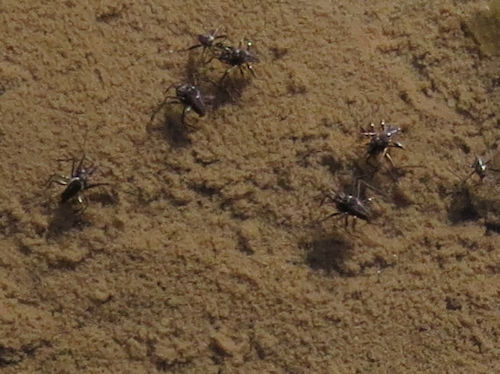
In the wildlife department, probably as a result of the hot weather, we found a new hatch of water striders. I'd never seen tiny ones before. I wonder if this means there won't be many next year. If the eggs are supposed to overwinter and hatch in the spring will this be a problem, or will these mature quickly and lay more eggs? I don't know!
tiny water striders


And it was a fantastic day for me! I found a new stage of a plant I've only seen in Ohio. This is Wingstem. The seed pods are distinctive and attractive.
wingstem seed pods


One more road day, but it will have adventures. Stay tuned.

See Wingstem

Tuesday, August 22, 2023

Birdfoot Trefoil Seeds


Let's back up almost 3 years. At the link below I show you a hobby microscope that takes pictures. Well, it was supposed to. The first one didn't work right, so I sent it back. The second one didn't work right either. I sent that back and gave up. A couple of weeks ago I found this which just plugs into a USB port. Like the other one, it doesn't have the clarity I would like, but I can live with it for the price. It was much cheaper than the other one.
USB microscope


Here is Birdsfoot Trefoil, Lotus corniculatus. It's alien, sigh. I love the color- the pure yellow. You see it along the roadsides all summer long. If it doesn't get mowed, it can be almost 2 feet tall, but if it gets cut down it will flower in a low mat. As you might guess from the flower, it's a legume.
birdsfoot trefoil


I always thought the name came from the clusters of leaves. You can easily tell this from clover, even when it's not blooming, because the leaves, other than the terminal one in each cluster, are assymetric. Each cluster looks sort of bird-footy.
birdsfoot trefoil


Ha! This year, I looked at the seed pods. Does anyone have any other questions about how this plant got its common name?
birdsfoot trefoil seed pods


Here is a closer look at where the pods grow out of the flowers.
birdsfoot trefoil seed pods


It looks as if some very small insect enjoys the seeds for snacking. The undersides of many of the pods had tiny holes drilled in them.
birdsfoot trefoil seed pod


When I broke a pod open, you can see from the traces of membrane that the seeds lie inside it just like peas. Makes sense, peas are also a legume. These seeds are tiny dark brown "peas."
birdsfoot trefoil seeds


I also took a picture of the seeds with the measuring card, but it didn't save properly. Note to self to pay more attention next time. This is basically Chinese junk electronics, but if I can have fun with it for a while, great! Anyway, the seeds are about 1.2mm in diameter. There isn't enough magnification to see any detail of the surface. Maybe someday I can have a really good video scope.

I worked on various projects all day, and I need to step up the productivity level tomorrow. I have a meeting starting very soon, so I don't have time to retake the picture with the ruler right now. Maybe tomorrow. Good thing it's a Zoom meeting. I also need a shower!

See New Toy- Not Quite

Thursday, July 20, 2023

Plant Profile- Cocklebur or Clotbur


I'm still hunting for the picture I really want to show you. Meanwhile, I found these.

This is most of the rest of the life cycle of Common Cocklebur or Clotbur, Xanthium strumarium. (Link below about the seeds) There's discussion on whether it's native to Eurasia and was brought here or the other way around! I don't have pictures of the flowers yet, which are moderately interesting, so you may see this plant again.

At any rate, it's not a plant many people are going to like. Here's what a roadside covered with it looks like before it blooms.
cocklebur Xanthium strumarium


The leaves are rather distinctive. A few other plants look similar, but it's pretty easy to identify. Here they are closer. Similar leaves might be: Coltsfoot, but they are short and not branched, Sycamore, but that's a tree, Velvetleaf, which has large leaves but not as lobed.
cocklebur Xanthium strumarium


The stem is streaked, so I'm a little surprised the word "maculatum" isn't in the name. So how about the name? The binomial name is always so much easier to remember if you know what it means. So Xanthos is Greek for yellow. I knew that, but there's nothing on this plant that's yellow. Well! They used this plant to dye their hair yellow! Another source says the seedpods turn from green to yellow, but the first idea comes from Miriam-Webster which seems more reliable. Strumarium is supposedly a "cushion-like swelling," apparently referring to the rounded form of the seed pods.
cocklebur Xanthium strumarium


Animals die from eating this plant, as it causes liver failure. Farmers sure don't want to see it growing in their pastures. It's not so good for humans either. Supposedly it's been used medicinally, but people who eat it often die.

As if that weren't enough, once it forms the seedpods, it's no fun either. These are nasty seedpods, with hooks like burdock but much stiffer. It's actually painful to pick these up.
cocklebur Xanthium strumarium


It's a novelty to find this plant, but it's no treat.

In other news, we had an inch of rain overnight, and then thunder and wind in the morning. Consequently, I worked inside. I kept busy all morning, but I wasn't doing anything that is a priority. I did get my act together in the afternoon and worked hard on a priority project. Also dug up some more autumn olive. Maybe one or two more sessions of that and I can finish the mowing (I don't work on the olive for very long at a time. It's hard and nasty work. It has thorns.)

See Cocklebur Seeds

Sunday, February 19, 2023

Milkweed Music

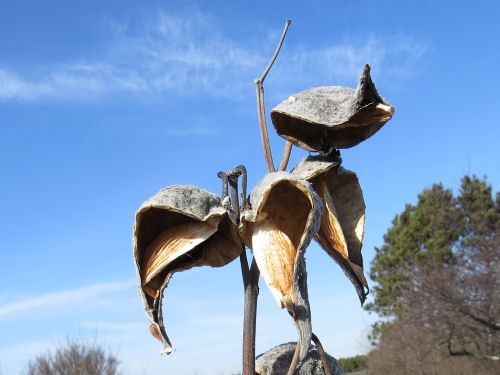
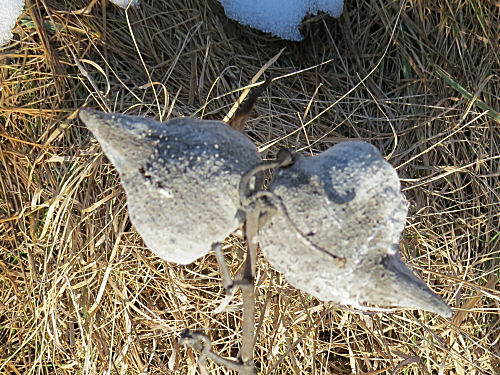
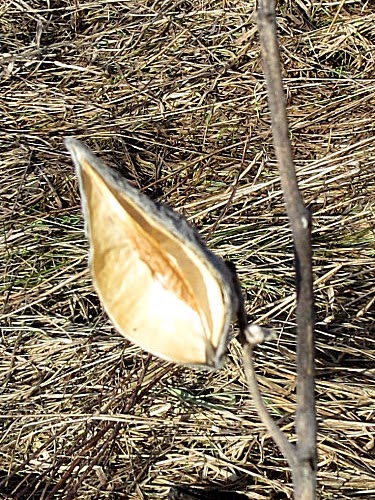
  I told Marianne D. that I would check to see if there were still some milkweed seeds I could send her for a Girl Scout project. Nothing doing. The pods have all opened and the seeds have all blown away. Every one I could find was totally empty.

So she won't get seeds, but you get pictures because I always think these pods make artistic shapes.
milkweed pod

milkweed pod


There are nicer pictures at the link below.

In other news: all the same stuff. Making a little progress on all current projects. Probably the biggest headache is getting software installed on the new computer.

See Pod'N Me

Thursday, December 15, 2022

Redstem Stork's Bill - Day 380

  This was my second day off, the day that was supposed to be the big storm. Ho hum. It was a really good day to not hike, but all it amounted to here was rain and a little over an inch of wet snow. Sloppy, but it won't affect hiking very much.

I was going to go back and show you three seeds that I haven't been able to identify. Some of you know that one of my totally ridiculous life goals is to be able to identify every plant in the NE United States in every season of the year.

OK, when you are done laughing, I'll just show you one seed, but now I can identify it. And shame on me. It's found in Michigan, but I didn't know it. It's alien, but it's become so naturalized, it's found in 48 states and 7 Canadian provinces, including my home county. When blooming, it looks so much like the common Herb Robert and several other members of the Geranium family, that I probably overlooked it.

However, in North Dakota, I began finding these seeds screwed into my pants. What the heck? They were poking me, but so interesting!
redstem storksbill seed

Look at the stalk more closely. It's curled like a corkscrew, and the tip of the wider part is also curved. I've had this seed screwed into a curtain since North Dakota because I think it is so fascinating.
redstem storks bill


So here's another thing to ponder, is this the seed itself or the seed pod? This is the seed itself. The pod looks like any of the other long-stemmed Geranium pods that get lumped under the common name of Stork's Bills.

Now for the really fascinating part. I thought probably the wind would catch that tail, and screw the seed into the ground. But that's not how it plants itself at all. The tail unwinds when subjected to water which makes the tip rotate and plant itself in crevices. Here's a video of the tail reacting to water. From Wikipedia.

Video of redstem stork's bill seed in water

Plants are amazing!

In other news: I spent a whole lot more of the day than I like on the phone making plans, and talking with a reporter. I started another news article, did more planning, went grocery shopping, did laundry, cooked a pot of food that will last for a few days

Tomorrow, we return to our regularly scheduled hiking.

See It's the Little Things

Wednesday, February 3, 2021

Seeds- Common Cocklebur or Clotbur

  Even though I sent back the digital magnifiers that were supposed to take pictures but didn't work, we can still do seeds from time to time. Here is an unpopular plant- Common cocklebur, also called clotbur. I took some pictures of leaves in the summer, but can I find them? No. So, you'll probably see this plant again when I do.

The fruits are even more tenacious than burdock. Not only do they have little barbed prickers, but they aren't soft like burdock. These kind of hurt when you try to pick one up. One easy winter distinction from burdock is that these seed pods are oval (burdock is round). common cocklebur

While there used to be up to about 15 species of Xanthium recognized in North America, it's pretty much been reduced to about three, with the differences considered regional variation of the same plant, Xanthium strumarium. It may be nasty, but it is native. common cocklebur

They grow in waste places, roadsides, and edges of fields. common cocklebur

Here's a closer view of the fruits/seed pods. You can see those velcro-like hooks. The two little projections from the top of the pod are called the beaks. They sort of make it look like some prickly insect. The two skinny ones are halves of the first one I cut open, and I also accidentally cut the seed (lower right) in two.
common cocklebur


This is only the seed case. The seed- that smooth pointed oval that looks a little like a sunflower seed kernel- is actually inside. The cases are surprisingly tough. I had a hard time cutting one open to get the seeds out. There are two seeds lying longitudinally in each fruit.
common cocklebur


Supposedly, eating the plants has been known to kill people and animals. However, also supposedly, some Native Americans used the seeds for medicinal and hallucinogeic purposes. I was very surprised, after cutting a couple of the pods open and handling it, to discover it has an odor rather like sage. One place said the seeds could be ground with corn meal to make a flour. I'm here to tell you that unless someone found a better way to open those pods, that would be a ton of work. I had to use an exacto knife and something to hold the bur, and press really hard.

In other news: There's not much. I worked on a couple of projects and did a little cleaning. Took a short walk. Ho hum.

See Seeds