Entries to Win Afghan

Sign up to receive the Books Leaving Footprints Newsletter. Comes out occasionally. No spam. No list swapping. Just email me! jhyshark@gmail.com Previous gifts include a short story, a poem, and coupons. Add your name, and don't miss out!
Showing posts with label agriculture. Show all posts

Saturday, April 18, 2026

Tustin and Potatoes


What does the village of Tustin have to do with potatoes, you ask? The Pine River Museum is located in Tustin, in a former potato warehouse. The building is 200 feet long, but narrow so that it had multiple bays that fronted on the railroad.
pine river museum tustin michigan


And surprisingly, it has a basement that was also filled with potatoes at harvest time. They cut through the floor in one place and added crates and fake potatoes to show how that would have been used.
display of a potato warehouse


The primary agricultural product of the area was potatoes. Actually, there still are a lot of potatoes grown in the area. This is a field of them in blossom just a little south from there. (another year, another month) potato field

This is one display of hand tools used in the ag business of 100 years ago. there are potato and corn planters on the left, along with a number of itmes that were used in other farm pursuits- a fruit picking bag, shearing scissors for sheep, wooden grain shovels, corn knife, hay rake, hay knife, and more.
agricultural hand tools


I was especially surprised at this. These are hand-carved yokes for carrying two buckets. I have one of these that belonged to my grandfather. I guess I sort of thought these were an eastern thing. But, nope! Here are four more. Mine is most like the second one down. I'll show you some day.
hand carved yokes


I worked on various projects today including starting to get materials collected for Confidence Camp. It was cold outside, and I was a little sore from yesterday, but I did stuff.

See When I first saw the museum building

Wednesday, March 4, 2026

Rooted- Who Got it Right?


Tonight, I'm going to rant a little bit about the interpretation of the Philadelphia Flower Show theme for this year. As a reminder, it was "Rooted: Origins of Gardening in America." Basically, one exhibit got it right and a couple were marginal. Several talked a bit about the roots of culture, a few more did decorative things with roots or root-like shapes (the entrance garden). Most totally ignored it.

So, Mercer County Community College Horticulture and Plant Science Program nailed it, but the exhibit didn't get a lot of attention because it wasn't particularly showy. Basically, Mercer highlighted the contribuitions of three people/entities to gardening in the New World.

The plants in this picture are: spicebush, sycamore, winterberry, aromatic sumac, and pin oak- all nice native ornamentals, so I would guess they were used by one or more of these horticulturists, or maybe the school. but there wasn't enough interpretation.
native landscape plants


The three historical figures are Peter Henderson, 1822-1890. He pioneered the use of greenhouses and developed varieties of plants to grow in the North American climate. Bush Lima Beans and Pink Ponderosa tomatoes are still being grown today.

William Roberts, 1932-2020, of Rutgers University; in 1964 he invented the double-layer polyethylene greenhouse which dramatically reduced the costs associated with glass greenhouses.

Princeton Nurseries and three generations of the Flemer family, 1913-2010, ran one of the most successful plant nurseries ever operated in the United States. They developed the Snow Queen hydrangea, Princeton Sentry Ginkgo, and Greenspire Linden.
historic horticulturist


As part of this display these white peonies were blooming, but I don't know if they were a variety one of these people developed, although that would be my guess.
white peonies


This is the Princeton Sentry Ginkgo, so that's cool. Ginkgo is one of the oldest still-viable trees on the planet.
Princeton Sentry Gingo


At the corner of the display they did have a colorful produce stand.


Overall the exhibitors get an F from me for development of the assigned theme. There wasn't a single one that talked in any but the most superficial way about what roots do for the plant, or different kinds of roots, or the relationships with fungi. There wasn't anyone who mentioned parasitic plants that live on roots. There was only one passing mention of the "three sisters" of native tribes contributing to American gardening. I can think of a display from 2023 that fit the theme better than most this year!

That is not to say there is not a lot of beauty to share. Stay tuned for more colorful things and I promise not to rant much more.

I had a fairly laid-back day. We did a pile of Marie's errands, so she (not I) had the stress of that which included shopping (not a favorite of either of us). We walked in the mall, we visited Selma (who isn't doing so well), we cooked dinner and played our game.

Miles walked in 2026: 64.2

Indoor mall walking- 3 miles.

See Rooted

Thursday, November 6, 2025

A Few More Fall Color Shots


These have been taken at various times over the past week, but there wasn't room to add them to that day's blog post.

I'll lead off with a row of trees along the Methodist Church parking lot.
line of orange maple trees


I've been hunting for red this year. Here's one splash.
tree red in autumn


This was a few days ago, right on US 31 at Wolf Lake!
bright autumn tree with light through it


I had sort of forgotten how beautiful rural Oceana County is. There are a lot of rolling hills, and I loved my drive coming home yesterday. These fields were just stunning! Vinyard on the left.
autumn fields


But maybe this one is even nicer with asparagus in front, then an orchard, and the woods.
autumn field and orchard


And you know that quote- not sure who said it- "Of all the roads you take, make sure a few of them are dirt." Totally agree. 96th Avenue in Oceana County was up for the challenge. I took pictures at two different places, but decided this was the best. Can you feel the peace?
dirt road with autumn colors


I had a chance to go for a hike this morning, but I decided I really nneded to stay home and get some things done. Worked pretty steadily at all my projects. More time on the autumn olive and a little more putting the gardens to bed in the afternoon.

But, tomorrow, the discipline ends. I have a little adventure with a friend planned!

See More Fall Finery

Monday, September 9, 2024

Will Walk for Vegetables

 I've been trying really hard to walk almost every day, but it's hard to motivate myself to do roads. Also, I'm trying not to drive very far. Today's compromise was that I drove part of the way to a friend's house and then walked there and back to the car.

I went for a few tomatoes, but look what I came home with! Tomorrow... soup.
colorful vegetables


Neva did not want to be in the picture, but here is a tomoato plant. I'm telling you, there are not many smells better than veggies picked fresh from their plants. She wanted me to take more, but I don't want to get more than I can reasonably eat.
tomato plant


She also has a beautiful row of zinneas.
zinneas


Moving on to local agriculture. Here's an asparagus field gone to seed. Very common here- lots of asparagus farms.
asparagus field gone to seed


And more on the ever mysterious passtime of identifying wild asters. These are very similar except the white one has smaller flowers than the blue one. Yes, the second one is light blue. The blue of flowers often doesn't register well with a camera.

The white one is probably Small White Aster, formerly Aster vimineus or Aster racemosus, now Symphyotrichum racemosum. The flowers are larger than Calico Aster and the leaves are different. The stems are smooth and dark purple, and the leaves tend to curl downward at the edges. I'm never sure I'll remember all these details. And... so much for my opinion. The Michigan Herbarium does not show that species in Michigan. Possibly Panicled Aster Symphyotrichum lanceolatum although that one does not seem to have purple stems. I guess if I really care, I'll need to go back with a hand lens and take better pics.

Aster ID is fraught with issues. Decided I would leave my thought process as instructive.
panicled aster


Pretty sure this is Bushy Aster Symphyotrichum dumosum. Anyway, it's a pretty shade of light blue.


You know how it goes. I worked in the morning on projects, then walked in the afternoon. My gardens are being watered right now. I'm sure I won't walk as far tomorrow, but today I did 7 miles. Thankfully, there were patches of shade on some of the roads because it was pretty warm. Oh, and I did a load of laundry.

Miles walked in 2024: 418.2

See Bushy Aster

Friday, August 4, 2023

Chestnut Farm


I've been keeping my eye on this field for a lot of years. The trees were planted in 2002. I know that because there is a sign that was eventually put up telling the year. For a lot of years, without really looking as I drove past, I assumed it was a cherry orchard. The young trees were sticks of about the right size with the trunks wrapped to prevent rodent and rabbit damage.
chestnut orchard


But at some point that sign was put up explaining that this is a chestnut orchard! There is a website on the sign, but the address doesn't work. I tried to look up the farm, and it has a website, but it doesn't mention the chestnuts.

Anyway, I am seriously guessing these are blight-resistant hybrids. The leaves are long and slender with prominent teeth like American Chestnut.
chestnut leaf


But the backs are light colored where American Chestnut backs are dark green like the fronts, and the bud is shaped like Chinese Chestnut.
hybrid chestnut leaves


This is not very far from me at all. I need to visit at different times of the year to get pictures of them in bloom, and then when they fruit.

I learned today that Michigan is #1 in the country for commercial production of Chestnuts.

In other news: I got the snowblower out of jail- it has been at the repair shop awaiting a backordered part for way too long. I should have mowed some grass, but I didn't.

Bernie did 30 miles today, and is sleeping here one more night. His mouth is feeling better than it has for a long time, and he's pretty happy about that.

See American Chestnut in Michigan

Tuesday, July 25, 2023

Fruit Country


I've been looking hard for the picture I wanted to show you, but either I've lost my mind (and only thought I took it), or it's disappeared. I've looked through 3 years of photos (from home- not the hike), twice, and I can't find it.

It was a picture of an older cherry-picking machine. You'll have to settle for these pictures I took today of a slightly newer cherry-picking machine.
cherry picking machine


This is the other side of a different machine, but the same type. I'm betting that if you don't live or visit in fruit country, you don't know how these work.
cherry picker


Well, the reason I decided to share these at this time is because Mason County Press took some drone footage of a very new machine. Even though I knew how cherries were picked this video is mind-blowing because I'd never seen it from this angle, and the new machines are actually attractive.


P.S. They are also called a cherry shaker!

I visited another beautiful garden today, so those pictures will be in your future too.

I managed to work some on most projects, but I had some running around to do, and it was humid.

See Where the North Begins and the Fine Fruit Grows

Saturday, February 25, 2023

Mailboxes 1

  On the hike last year, I encountered quite a few interesting or whimsical mailboxes. However, even though I really enjoy finding these there were always more interesting features that defined the trail on any given day.

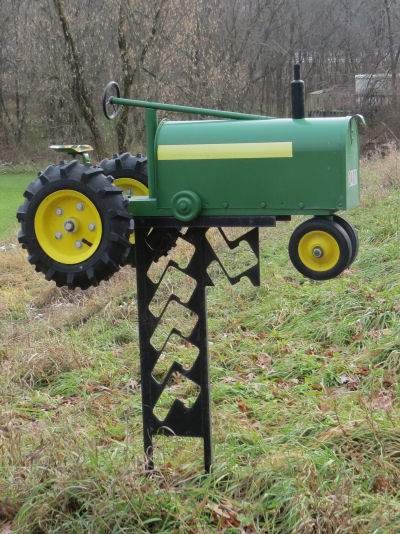
But I'd like to show them to you. Here are three. I especially like ones that are homemade
tractor mailbox


This one is a bit more weathered, but someone spent some time to make this horse.
horse mailbox


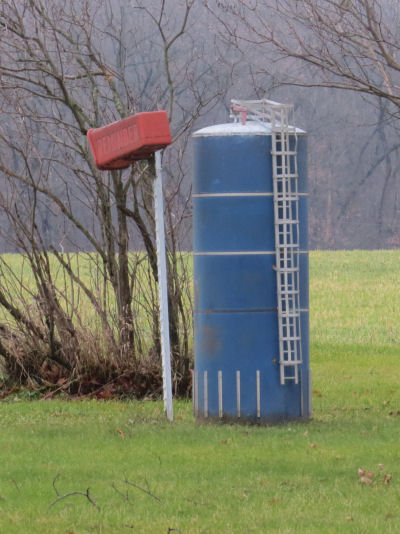
Completing this trio is a silo. I think we can safely conclude that these come from a rural area. And, yes, they were all within 25 miles of each other.
mailbox shaped like silo


Things like this just make me smile. Smiling is good.

In other news: I felt good and worked hard on all my projects. I need to be ready to leave here on Tuesday morning, so I need to keep moving. Biggest project news is that I solved an annoying issue of how a piece of software was displaying on the new computer. It just takes forever to make big transitions like this.

See Whimsy

Monday, October 4, 2021

Welcome to Rural October

  This field of pumpkins is so beautiful that many people are stopping to take pictures of it. field of pumpkins

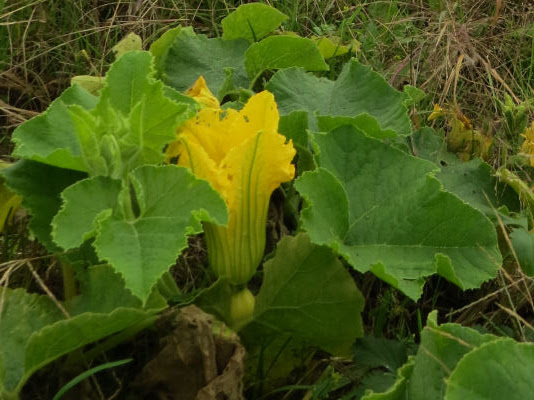
There are a few late blossoms that won't have time to turn into fruits, but they still add their own beauty. pumpkin blossom

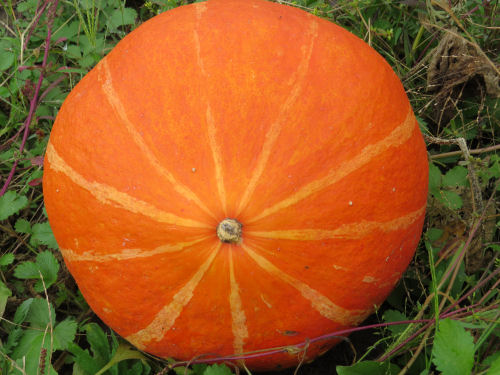
I'm not sure of the variety of these, but many had this interesting star pattern on the blossom end. pumpkin

Just a little reminder that the plant is a vine. pumpkin tendrils

In other news: I edited, I worked on the trailer, I took the recycling to Manistee, and did some shopping- trash bags seem to be the local supply chain crisis here. 63 items on the Big List with 17 crossed off leaving 46 to go, and I'm down to 57 days.

See Farm Country in Fall

Monday, March 8, 2021

An Unusual Concrete Silo

  It's been a long time since I brought you pictures of silos, but this one is unusual, and I've been wanting to share it for a while. It was also on yesterday's walk. So, here you go. The primary section of the barn has fallen, but the silo remains. Concrete silo top

This appears to be a rounded concrete block silo. Block silos have thicker walls than concrete stave silos (see link below). From what I could find, this probably predates the stave silos. Farmers were experimenting with materials other than wood, because the wood rotted from contact with the silage.

I learned that the familiar tower silos we associate with farms didn't come into use until the 1880s!

Here's a closeup of the wall where it was previously not exposed to view because it was inside the barn. Those blocks appear to me to be long and curved. That would suggest they were either custom cast or commercially available. In the short time I spent, I could not find a company that made such an item. That doesn't mean it didn't exist. However, a web site at silo.org verifies that farmers often made their own molds and cast blocks over the slower winter months. Molds could also be leased from construction companies. concrete block silo

The top is the most fascinating of all. It's the "coolie hat" style, and it seems to be cast concrete. That must have been one heck of a project to get it in place! Not to mention casting it without having it crack as it dried.

Another very interesting feature is the apparent stuccoing with concrete that was done to the exterior in the areas that were visible. concrete block silo

As if I don't have enough projects/ideas... this makes me want to write a book with lots of pictures about historic silos.

In other news: I had a longish meeting in the morning, and the rest of the day was spent doing tax prep. I took a short walk. But I feel quite productive!

See Concrete Stave Silos

Saturday, February 27, 2021

When Trails are Too Mushy

  Cathy and I wanted to do a good walk today, but with our sudden spring-like temperatures the trails have turned to total mush. Rather than struggle and not be able to get very far, we chose a road walk in the county that isn't just squares, and has some nice things to see. It also has some decent topography to enhance the workout factor.

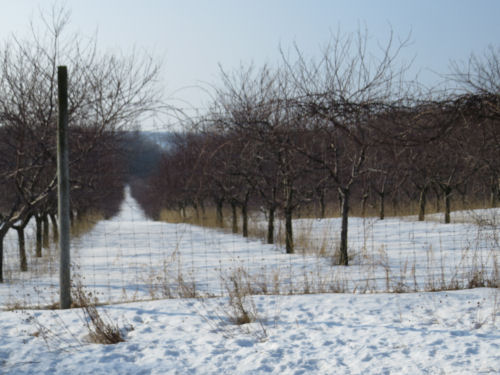
We began in some agricultural areas, mostly fruit farms. Orchards can provide some great pictures, but this is not one of them. Couldn't get a good perspective. You'll have to settle for a view that does at least show acres and acres of rows of fruit trees. cherry orchard

Here's the joke of the day. Carom boards are made in Ludington. Someone has found a use for old broken bases- as the backboards for their No Trespassing signs! Carom board with no trespassing sign

Eventually, we ended up on the back side of Pere Marquette Lake. So we were across the channel from the Ludington lighthouse. Not a great picture, but I like how the water and the sky are almost the same color. The lighthouse is the blockier tower toward the right. The building in the foreground is on the same side of the lake we were on, and the round tower is a channel marker. Ludington Lighthouse

Another interesting destination on that road is White Pine Village, a living history museum. There are 30 actual historic buildings that have been moved there, and during the season there is almost always some fun demonstration going on. This house is actually an administration building, but it made a nice picture, and is visible from the road. I haven't been there in a while- I really should go. It's a treasure of a destination, but when it's open, it's so overrun with tourists, I end up avoiding it. Rose Hawley administration building White Pine Village

Here's a winter view of the two carferries, head on. This side of the lake is the only place one can take a picture like this. The link below shows a similar shot taken in the fall. Ludington carferries

And one more... this is definitely not a great picture, but these bird are so skittish I was just thankful to end up with a picture that has the whole bird in it. This is a pileated woodpecker. They are really large, over a foot from crest to end of tail. pileated woodpecker

How did we do? We walked 10.8 miles!

In other news: After that (and clean up and lunch) I had an appointment about some editing. Now I am home and crashed for the evening!

See Apres L'Autumne